

Many writing teams deal with the same problem. A draft needs a new tone, a new structure or a better flow, yet the main idea must stay the same. This is where a paraphrasing tool becomes useful. It helps rewrite text in a fresh way while keeping the message intact. Clear rewriting takes skill and the right tools make the job easier for busy teams.
Writers, editors and content managers often handle tight deadlines. Manual rewriting takes time. A structured approach – paired with digital tools will help produce clear text that still matches the original intent. The guide below breaks down how to use these tools with care and how to avoid common mistakes that harm quality.
Table of Contents
- 1 Why Paraphrasing Matters for Modern Teams
- 2 How a Paraphrasing Tool Works
- 3 How To Keep Meaning Clear During Rewriting
- 4 Common Mistakes When Using a Paraphrasing Tool
- 5 Role of AI Detector Tools in Rewriting
- 6 Supporting Tools That Improve Rewriting Workflows
- 7 How To Use Paraphrasing Tools With Strong Frameworks
- 8 When Manual Rewriting Works Better
- 9 Final Thoughts
Why Paraphrasing Matters for Modern Teams
Rewriting is common in many fields. Marketing teams update old pages. Academic writers refine dense sections. Support teams rewrite help guides for clarity. A new version may be needed for tone, format or audience preference. Paraphrasing helps maintain clarity while reshaping the text.
A strong process reduces errors. A paraphrasing tool helps remove repetition and brings a fresh structure. Teams save time but the goal remains the same: produce text that reads well and still delivers the correct meaning.
How a Paraphrasing Tool Works
These tools scan your text, study patterns, and create new phrasing. They shift sentence structure. They swap certain terms for similar ones. They break long ideas into shorter parts or combine short ideas into fuller phrases. The goal is clarity without losing meaning.
Writers use these tools in different stages. Some start with a draft and use the tool for a cleaner first pass. Others use the tool halfway through the editing phase. Many teams only use it for tight sections that need a smoother flow.
A strong output still requires human review. Tools help restructure, but humans check context and tone. A balanced workflow makes rewriting smooth.
How To Keep Meaning Clear During Rewriting
Teams often worry that paraphrasing may distort the message. This risk goes down when a structured review process is in place. Here are steps that help maintain meaning:
1. Read the source first
Writers study the original message before rewriting. This step helps maintain accuracy. A paraphrasing tool supports the rewrite, but the review happens before and after the output.
2. Rewrite in sections
Shorter sections produce clearer results. A long block may confuse both tools and editors.
3. Compare both versions
Teams highlight differences. Any major shift in meaning gets corrected early.
4. Check tone and clarity
Rewriting should match the intended tone. A grammar checker can help polish sentences after the main rewrite.
5. Use supporting tools
A summarizer helps if the original text is too long. A word counter helps track target length. These additions guide the rewriting process.
Clear meaning comes from a steady workflow. Tools support the steps, but humans guide the message.
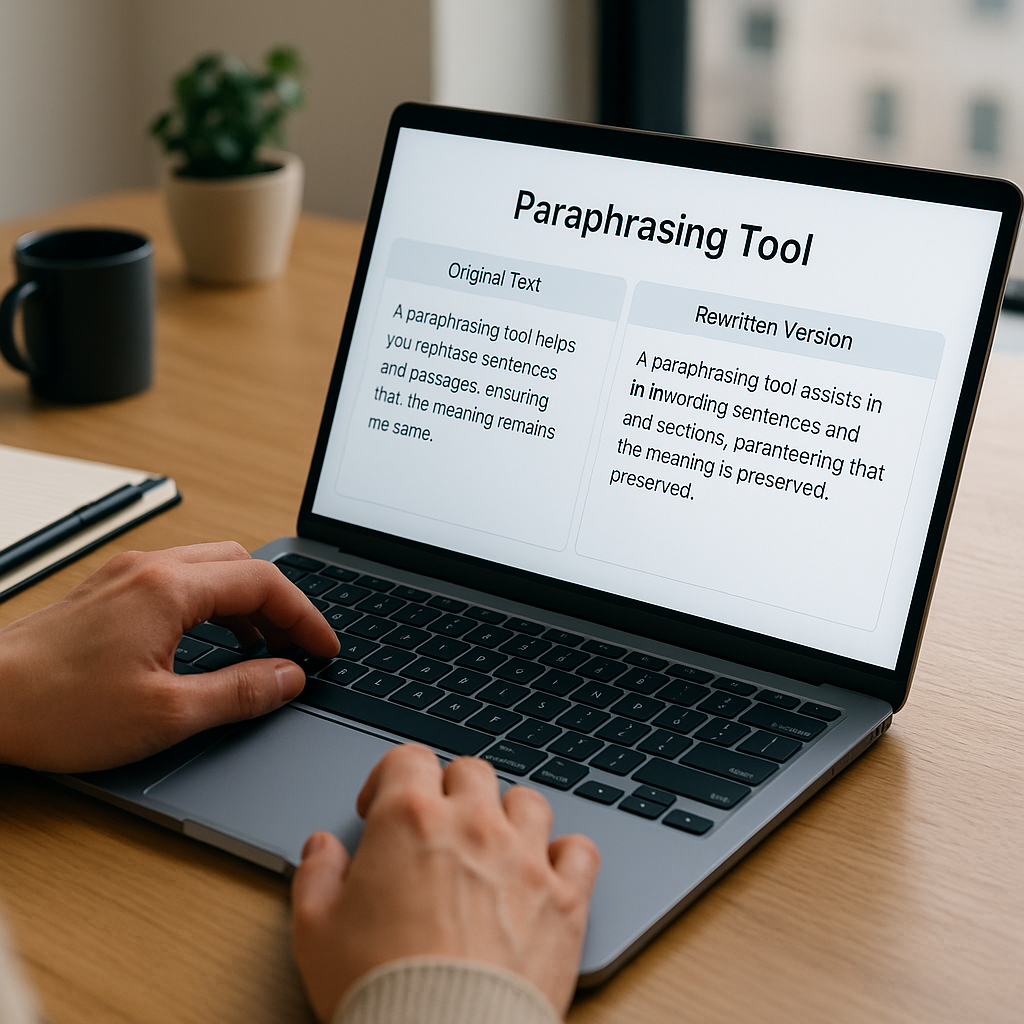
Common Mistakes When Using a Paraphrasing Tool
Misuse can weaken clarity. Teams benefit from avoiding these issues:
Over-editing
Some writers run the same text through multiple passes. This breaks the structure and weakens the meaning.
Ignoring context
Tools cannot fully understand every detail. Writers must check tone, intent, and implied meaning.
Excessive term swapping
Direct replacements may look strange in certain contexts. A careful edit avoids this.
Skipping final review
A human editor checks the last version for clarity and alignment.
Every tool must fit into a clean process. The rewrite only works well when the meaning stays intact.
Role of AI Detector Tools in Rewriting
Many teams rely on an AI detector to confirm that the text reads naturally. These tools scan patterns and highlight lines that look machine-generated. Rewriting often blends both tool output and manual edits, so this step helps refine the final version.
A good detection tool helps writers find sections that need a more natural voice. It points out areas with repeated patterns or stiff phrasing. This makes the final text smoother before publishing.
Supporting Tools That Improve Rewriting Workflows
A paraphrasing tool is one part of a larger editing process. Other tools fill important roles:
Summarizer
This tool reduces long text into short sections. Clear summaries help writers understand core ideas before rewriting.
Grammar checker
A grammar checker cleans up structure. It fixes stray punctuation and reduces awkward phrasing.
Word counter
A word counter helps teams match platform limits. Many writers must follow fixed lengths for emails, blogs, or social posts.
Each tool supports a different stage. Together, they create a complete workflow that helps produce strong text.
How To Use Paraphrasing Tools With Strong Frameworks
Teams produce better results when they follow a few habits:
- Set a clear goal before rewriting.
- Break long drafts into sections.
- Run a single pass through the tool.
- Compare the new version with the original.
- Test tone with a quick review.
- Polish the final copy with small edits.
This keeps the process simple and repeatable.
When Manual Rewriting Works Better
Tools are useful, but some projects still need manual work. Complex topics, emotional topics, or instructional topics often need careful phrasing. Human writers handle nuance better in these areas.
A paraphrasing tool can help shape early drafts. Final edits often come from trained writers who understand structure and intent.
Final Thoughts
Clear rewriting takes time, yet tools make the job easier when used with care. A paraphrasing tool supports structure. A summarizer supports planning. A grammar checker supports accuracy. A word counter helps maintain length. An AI detector supports natural tones.
These tools help teams finish clean drafts faster. A structured review keeps meaning accurate. When both steps work together, rewriting becomes a smooth and reliable part of any content process.