

A North Georgia mountain home can offer big views, quiet mornings, wooded privacy, and easy access to rivers, lakes, and trails. It can also come with practical details that are easy to miss during an exciting showing. The view matters, but the road, land, utilities, and rules matter just as much.
For buyers comparing Blue Ridge and nearby mountain communities, Blue Ridge GA real estate experts Georgia Real Estate Company is a useful local resource. Georgia Real Estate Company focuses on North Georgia mountain property searches, community information, and buyer and seller guidance in the Blue Ridge area, including Mineral Bluff, Morganton, and Epworth. Use this checklist to evaluate a full-time home, weekend cabin, vacant parcel, or potential vacation rental in a clear, systematic process.
Table of Contents
- 1 Decide How You Will Use the Property
- 2 Compare Communities Before Touring Homes
- 3 Study the Land, Not Just the House
- 4 Check Road Access and Year-Round Travel
- 5 Confirm Water, Septic, and Utilities
- 6 Review Creek, Lake, and Flood Questions
- 7 Understand Stream Buffers and Building Limits
- 8 Inspect Construction and Maintenance Needs
- 9 Verify Zoning, HOA Rules, and Rental Restrictions
- 10 Build a Complete Ownership Budget
- 11 Use a Clear Offer and Due-Diligence Plan
- 12 Common Questions From Mountain-Home Buyers
- 13 Buy the Property Behind the View
Decide How You Will Use the Property
Start with the lifestyle, not the listing photos. A cabin that works beautifully for occasional weekends may be frustrating as a primary residence. Consider how often you will be there, whether you need a dedicated workspace, how many guests may visit, and how much storage you need for outdoor gear, tools, and supplies.
- Will reliable high-speed internet be essential for remote work?
- Do guests need simple parking and easy access to the driveway?
- Is seclusion more important than a short drive to town?
- Will rental income be necessary to support ownership costs?
Compare Communities Before Touring Homes
Blue Ridge, Mineral Bluff, Morganton, Epworth, Ellijay, Blairsville, and the surrounding areas can feel very different from one another. Compare travel time to groceries, medical care, restaurants, marinas, trailheads, and major roads. A quiet rural setting may be ideal for privacy, while a neighborhood closer to town can offer easier daily living, stronger resale appeal, and more convenient access to rentals.
Study the Land, Not Just the House
In the mountains, usable land can be more important than total acreage. Walk the property and look beyond the home itself. Check the slope, drainage, view corridors, driveway layout, outdoor gathering areas, and possible locations for a garage, shed, or guest structure. Ask for a recent survey and review property lines, easements, and topographic information. A wooded parcel is not automatically easy to build on or maintain.
Check Road Access and Year-Round Travel
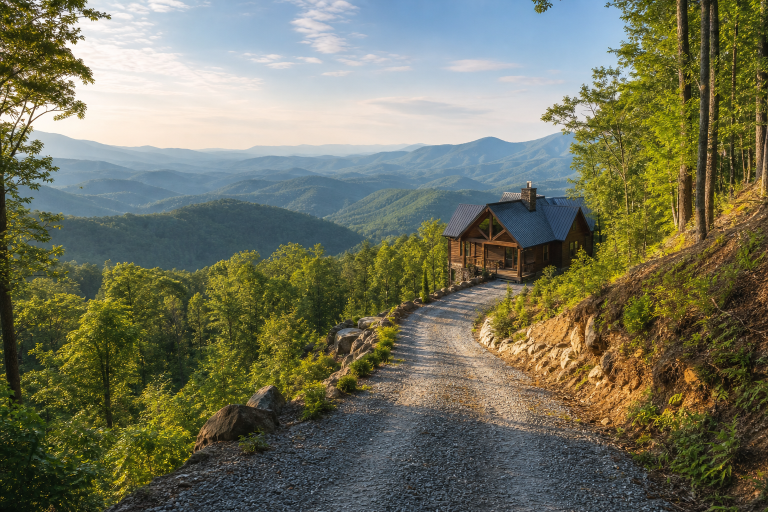
Drive the complete route from the public road to the house. Look for steep grades, narrow curves, loose gravel, sharp drop-offs, drainage problems, and limited turnaround room. Ask who owns and maintains any private road, whether there is a written road-maintenance agreement, and how repair expenses are divided. If possible, revisit after rain and confirm that emergency vehicles, deliveries, contractors, and visiting family can reach the property comfortably.
Confirm Water, Septic, and Utilities
Determine whether the property uses public water and sewer, a private well, septic, or shared systems. Request well records, septic permits, pumping history, repair invoices, and service agreements. Older septic systems deserve careful review, especially if frequent guests or renters may increase usage. Test cell coverage in several areas and verify which internet providers are available before assuming remote work will be easy. Utility upgrades can be more expensive on remote or steep lots.
Review Creek, Lake, and Flood Questions
Waterfrontage can add enjoyment and value, but it also requires due diligence. Review drainage patterns, erosion, retaining walls, shoreline access, dock rights, and any easements affecting the water. Search the FEMA Flood Map Service Center before removing inspection or financing contingencies. Flood maps are a starting point, not a replacement for a survey, elevation review, insurance quote, or professional assessment of the site.
Understand Stream Buffers and Building Limits
Creekfront and lakefront parcels may have limits on clearing, grading, driveway work, decks, and shoreline improvements. Before planning construction or major land changes, review the Georgia Environmental Protection Division’s erosion and sedimentation guidance. Confirm county requirements with the planning office and discuss boundaries, buffers, and potential improvements with a qualified surveyor. State and local rules may both apply.
Inspect Construction and Maintenance Needs
Mountain homes often need more routine attention than suburban properties. During inspections, pay close attention to roof age and drainage, deck framing, crawl-space moisture, foundation movement, retaining walls, chimneys, fireplaces, HVAC equipment, hot tubs, and trees near the house. A licensed home inspection is essential, but specialty inspections may also be appropriate. Build a first-year repair and maintenance budget before making an offer.
Verify Zoning, HOA Rules, and Rental Restrictions
Confirm the property’s zoning and permitted uses. If short-term rentals are part of the plan, verify rules with the county or city, the subdivision, and the homeowners’ association. Review restrictions involving occupancy, parking, noise, outdoor fires, pets, signs, and additional structures. Nearby rental cabins do not prove that a specific home has the same permissions. Get important answers in writing before closing.
Build a Complete Ownership Budget
Do not stop at the purchase price and mortgage payment. Include property taxes, homeowners and flood insurance, road or HOA fees, utilities, internet, tree work, septic service, storm cleanup, furnishings, guest supplies, and property management if applicable. A lower-priced home can become costly if it has difficult access, deferred repairs, or unusually high utility needs.
Use a Clear Offer and Due-Diligence Plan
- Set a realistic all-in budget before touring.
- Choose areas that match your travel and lifestyle needs.
- Review disclosures, surveys, permits, and property records early.
- Schedule inspections promptly during the contract period.
- Verify insurance availability, road access, utilities, zoning, and rental rules.
- Ask the closing attorney to review title matters, easements, and restrictions.
Common Questions From Mountain-Home Buyers
Is a mountain cabin a good first home?
It can be, especially when the home is well-maintained and near established services. First-time buyers should be realistic about maintenance, access, insurance, and utility responsibilities.
What is the biggest buyer mistake?
Falling in love with the view before checking the land, driveway, septic system, boundaries, and legal restrictions is one of the most expensive mistakes.
Should buyers order a survey?
A survey is particularly valuable for acreage, creek frontage, shared driveways, older deeds, and uncertain boundaries.
Can a mountain home be a short-term rental?
Possibly, but permission depends on the property’s location, zoning, local regulations, permits, and HOA documents. Verify every layer before relying on projected rental income.
Buy the Property Behind the View
The best North Georgia mountain home purchase is not only scenic. It is accessible, maintainable, insurable, legally usable, and suited to the way you plan to live. Slow down, ask direct questions, and rely on qualified local professionals. Careful research can turn a beautiful mountain property into a comfortable long-term home, retreat, or investment.