

Car care is easier when it becomes routine rather than a last-minute response to a dashboard warning light. A simple seasonal plan gives drivers a practical way to keep an eye on the parts that affect reliability, comfort, and safety. For local service information and vehicle support, Learn More while building a maintenance routine that fits your vehicle and driving habits. A year-round checklist also helps separate quick owner checks from work that a qualified technician should handle. Whether a vehicle is used for short commutes, family travel, towing, or daily highway miles, a few minutes of attention each month can make maintenance feel far more manageable.
Table of Contents
- 1 Why a Year-Round Car Care Plan Helps
- 2 January Through March: Prepare for Cold Weather
- 3 April Through June: Recover From Winter Wear
- 4 July Through September: Manage Heat and Road Trips
- 5 October Through December: Get Ready for Shorter Days
- 6 Monthly Checks That Take Less Than 15 Minutes
- 7 Service Items to Track by Mileage
- 8 How to Read the Owner’s Manual
- 9 Warning Signs That Should Not Wait
- 10 How to Keep Better Maintenance Records
- 11 Common Questions About Seasonal Car Care
- 12 Make Vehicle Care a Simple Routine
- 13 Conclusion
Why a Year-Round Car Care Plan Helps
Maintenance should be based on both time and mileage. Oil changes, tire rotations, filter replacements, and other services may be due after a certain number of miles. However, a lightly driven vehicle can still experience battery drain, aging fluids, dry rubber components, and tire-pressure changes. A calendar provides a reminder to look beyond the odometer. Small warning signs are often easier to address early. A faint brake noise, a slow crank at startup, uneven tire wear, or a small fluid spot under the vehicle may not stop a trip today, but ignoring it can lead to more complicated repairs later.
January Through March: Prepare for Cold Weather
Cold mornings can reveal a weak battery, so watch for slow cranking, dim lights, corrosion around the battery terminals, or a swollen battery case. Check tire pressure when tires are cold, inspect tread and sidewalls, and look for uneven wear. Low temperatures can reduce pressure readings, so use the pressure listed on the driver-door placard or in the owner’s manual. Test the heater, defroster, washer fluid, wipers, headlights, brake lights, and turn signals. Check the visible coolant level and look for leaks around hoses or beneath the vehicle. Keep blankets, drinking water, a flashlight, a phone charger, basic first-aid items, and any needed medications in an emergency kit. In snowy areas, regular washing matters because salt, brine, and moisture can contribute to corrosion beneath the vehicle and around brake components.
April Through June: Recover From Winter Wear
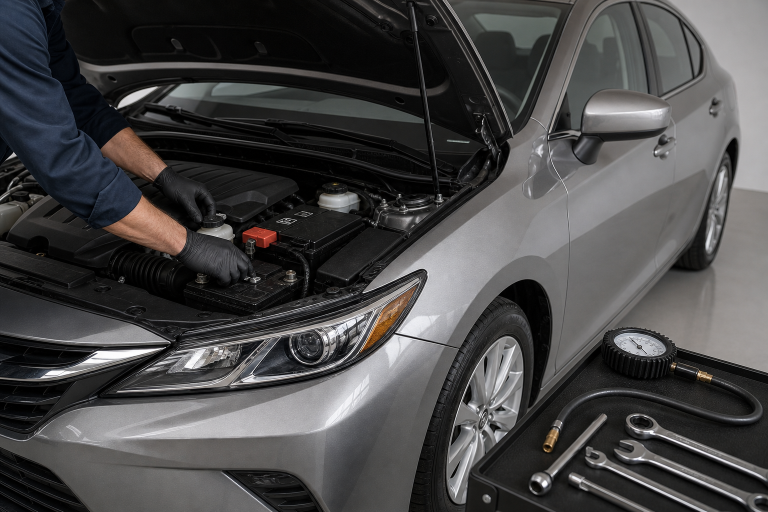
After winter, inspect the vehicle for chipped paint, rust, cracked hoses, worn wiper blades, loose splash shields, and pothole damage. If the vehicle pulls to one side, the steering wheel is off-center, or tire wear is uneven, schedule an inspection to address alignment and suspension concerns. Listen for brake squeal or grinding, and do not ignore a soft pedal, shaking while braking, or reduced confidence in stopping. Wash the exterior and underbody thoroughly to remove lingering road treatment. Regular pressure, tread, balance, and alignment checks can also help drivers catch tire-related concerns before a busy travel season.
July Through September: Manage Heat and Road Trips
Summer heat stresses cooling systems, air conditioning, tires, and batteries. Before a long drive, test the air conditioning, check the coolant level and the condition of visible hoses, and watch for cracked belts or signs of a leak near the radiator. Check tire pressure before driving, not immediately after highway travel, and inspect the spare tire as well. Road-trip preparation should include the battery, lights, wipers, brakes, fluids, charger, jack, tire tools, and emergency supplies. Confirm that the spare is inflated and that you know where the wheel-lock key is stored, if your vehicle uses one. Resolve dashboard warnings before leaving, especially warnings related to tires, brakes, temperature, oil pressure, or charging.
October Through December: Get Ready for Shorter Days
As daylight hours shrink, test headlights, high beams, brake lights, turn signals, reverse lights, and hazard lights. Replace wiper blades that streak, skip, chatter, or leave cloudy sections of glass. Check that the heater and defroster clear the windshield effectively before colder weather arrives. Inspect tires before the first frost or snow, especially if the tread is worn or the vehicle has developed a vibration. Wash more often when roads are treated with salt or brine, and refresh the emergency kit by replacing expired supplies and checking flashlight batteries.
Monthly Checks That Take Less Than 15 Minutes
- Inspect all four tires and the spare for pressure, tread wear, cracks, nails, or bulges.
- Check the engine oil level if the vehicle has a dipstick.
- Confirm washer fluid and visible coolant levels are adequate.
- Test exterior lights with help from another person or by using reflections.
- Look for new dashboard warning lights.
- Listen for unfamiliar clicks, squeaks, rattles, grinding, or vibration.
- Check beneath the vehicle for fresh drips or puddles.
Service Items to Track by Mileage
Use the owner’s manual to track oil and filter changes, tire rotations, brake inspections, air filter checks, spark plug intervals, and replacement schedules for belts and other wear items. It should also identify when coolant, transmission fluid, differential fluid, and brake fluid need inspection or replacement. Newer vehicles may also need software updates, recall checks, or diagnostic service.
How to Read the Owner’s Manual
Find the maintenance schedule and compare the normal-service section with the severe-service section. Frequent short trips, stop-and-go traffic, towing, dusty roads, and extreme temperatures can change the recommended schedule. Verify the correct oil grade, coolant type, tire pressure, and approved replacement parts before buying supplies. When reviewing a repair estimate, compare suggested maintenance with factory guidance and ask what problem the service is intended to prevent or correct. The questions to ask a repair shop can help drivers understand estimates, written records, and recommended work before approving service.
Warning Signs That Should Not Wait
Seek prompt help for brake grinding, a soft brake pedal, overheating, smoke, flashing warning lights, strong fuel or burning oil smells, serious steering pull, or loss of steering control. A tire with a visible bulge, deep crack, exposed cords, or a rapidly dropping pressure reading should not be driven normally. Repeated jump-starts and slow engine cranking also deserve timely battery and charging-system testing.
How to Keep Better Maintenance Records
Save invoices in a phone folder, cloud account, or paper file. Record the date, mileage, work performed, parts used, and any symptoms that led to the visit. Set reminders for time-based services and keep recall notices, warranty documents, and roadside assistance information together. These records can reveal recurring problems and make future service planning simpler.
Common Questions About Seasonal Car Care
How Often Should a Vehicle Be Inspected?
Basic checks work well as a monthly habit. A thorough inspection is wise during seasonal changes, before extended travel, and whenever a new sound, smell, warning light, or change in handling appears.
Should Maintenance Follow Mileage or Time?
Both matter. Low-mileage vehicles still need attention because fluids, batteries, tires, seals, and rubber parts can age even when the vehicle is not driven often.
Does Cold Weather Lower Tire Pressure?
Temperature changes can lower tire-pressure readings. Check pressure when tires are cold and follow the vehicle manufacturer’s recommended pressure rather than the maximum pressure printed on the tire sidewall.
What Should Be Checked Before a Road Trip?
Review tires, brakes, lights, fluids, wipers, battery condition, the spare tire, emergency supplies, and every active warning light before leaving.
When Should a Driver Stop and Seek Help?
Stop as soon as it is safe when the vehicle overheats, loses braking ability, develops smoke, shows a flashing warning light, has major tire damage, or becomes difficult to steer.
Make Vehicle Care a Simple Routine
Car care does not need to be complicated. Monthly checks, seasonal reviews, manual-based service intervals, and organized records can help drivers spot concerns earlier and enjoy safer, more dependable travel throughout 2026.
Conclusion
A year-round car care routine makes vehicle ownership safer, more predictable, and easier to manage. By regularly checking tires, brakes, fluids, lights, batteries, and warning signs, drivers can catch potential problems before they require expensive repairs. Following the owner’s manual, adjusting maintenance for weather and driving habits, and keeping clear service records can also support long-term reliability and value. Consistent attention throughout the year helps ensure the vehicle remains ready for everyday commuting, road trips, and changing seasonal conditions.