

When faced with legal trouble in the military, the right defense can make the difference between protecting your reputation, career, and even freedom. Military law is complicated and unique, requiring a specific set of skills and expertise. If you are under investigation or charged with a crime in the armed forces, selecting an experienced lawyer for military criminal charges is critical. Legal challenges for service members are not like civilian cases. Military courts follow their own procedures, and the consequences can impact not only your current service but also your future benefits and personal life. Knowing what to look for in a defense attorney can give you the reassurance that your rights will be protected and your case handled with the care it deserves.
Table of Contents
Understanding Military Law Versus Civilian Law
The military justice system operates under the UCMJ, which includes laws and procedures that are unfamiliar to most civilian attorneys. Service members may face charges such as disobeying orders, conduct unbecoming, or specific crimes like AWOL (Absence Without Leave), each of which must be defended with a strong grasp of military-specific legal precedents. Unlike civilian courts, military proceedings use panels rather than juries and allow commanding officers significant input, which can affect case strategy. Due to these differences, representation from a defense attorney who primarily practices civilian law often proves insufficient. You need a lawyer who not only understands these differences academically but has practical experience defending similar cases before military courts and administrative boards. Cases in military courtrooms require a nuanced approach that balances strict rules with the culture of military service.
The Importance of Experience in Military Defense
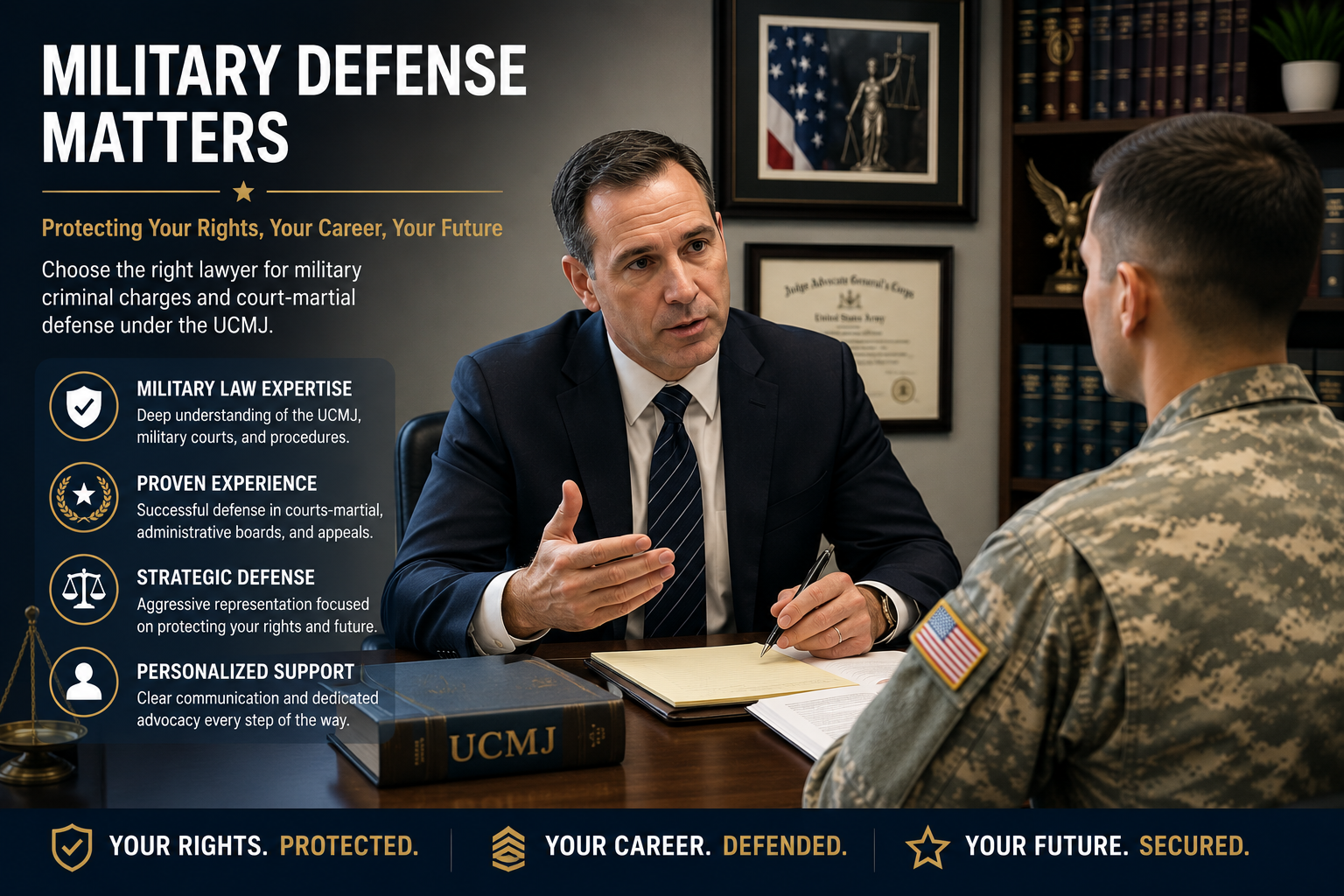
Military trials, or courts-martial, are highly specialized. Your attorney should have a proven track record of handling cases like yours, whether in court-martial trials, administrative separation boards, or appeals. Look for lawyers who have served as JAG (Judge Advocate General) officers or have significant military defense experience. Their familiarity with command structures, military investigators, and the unique challenges service members face is invaluable. Additionally, experienced attorneys can better anticipate prosecution strategies, negotiate with military authorities, and guide you on potential outcomes and plea options. The stakes include not just criminal convictions but also loss of rank, pay, and long-term benefits, so experience matters at every step.
Specialized Skills and Certifications to Look For
Beyond basic legal training, look for lawyers who are certified to practice before military courts or have additional credentials relevant to military law. Membership in organizations such as the National Association of Criminal Defense Lawyers (NACDL) or state bar military/veteran committees is a plus. Ongoing education in the evolving field of military justice signals commitment to best practices. Military defense work also requires negotiation skills, evidence analysis, clear communication, and the ability to advocate aggressively while keeping your best interests at the forefront. Make sure your chosen attorney has a history of successfully executing these core competencies.
How to Vet Military Defense Attorneys
Start by researching potential lawyers online. Look for client reviews, professional recognition, and disciplinary history. Interview several candidates, and focus your search on firms and attorneys who consistently represent service members and who are familiar with the branch of the military in which you serve. Pay attention to their familiarity with case law and their willingness to explain your legal situation in clear, concise terms.
Essential Questions to Ask During Consultations
- How many military cases have you handled?
- What is your experience with cases like mine?
- What outcomes have you secured for clients facing similar charges?
- Are you familiar with the particular branch or base where my case will be heard?
- How do you approach plea discussions, administrative hearings, or appeals?
- What is your fee structure, and are there additional costs?
Be wary of attorneys who gloss over your questions, promise specific results, or lack details about their military law background.
Red Flags and Warning Signs
Not every attorney advertising military defense expertise is truly qualified. Warning signs include a lack of direct military case experience, a history of professional discipline, unclear communication about the legal process, or a one-size-fits-all approach. Be especially cautious of anyone who guarantees a specific outcome, as military cases can be unpredictable, and ethical lawyers will make this clear during consultations.
Conclusion
Choosing the right military defense lawyer is about more than credentials, as it is about expertise, integrity, communication, and proven results. By doing your due diligence and asking the right questions, you can protect your career, benefits, and future. Remember, your military service is worth defending with the finest legal support available.