

In today’s rapidly evolving energy landscape, commercial solar projects present businesses with a dynamic opportunity to reduce operational costs, enhance sustainability, and achieve energy independence. With growing emphasis on both cost control and environmental impact, harnessing solar energy positions companies to reduce electricity costs and stand out as leaders in environmental responsibility. To explore financing solutions that can help your business get started, look into commercial solar loans to power your next project efficiently and affordably.
Beyond immediate cost savings, embracing commercial solar signals a long-term commitment to environmental stewardship. Companies that integrate solar technologies not only benefit financially but also differentiate their brands as eco-conscious and forward-thinking. With more government incentives and robust financing mechanisms than ever, solar installation is accessible to organizations of every size and sector.
Driven by a rapidly advancing marketplace, commercial solar projects now reflect not just fiscal responsibility, but also corporate social responsibility through reduced carbon emissions and positive community impact. As the transition to renewable energy accelerates, businesses adopting solar are seizing new chances for growth and market positioning.
Recent advances in microgrid technology and storage integration have further expanded the potential of commercial solar, with a growing number of organizations leveraging innovative partnerships and development models to maximize benefits. This article explores how adopting solar power can be a transformative strategy for your business.
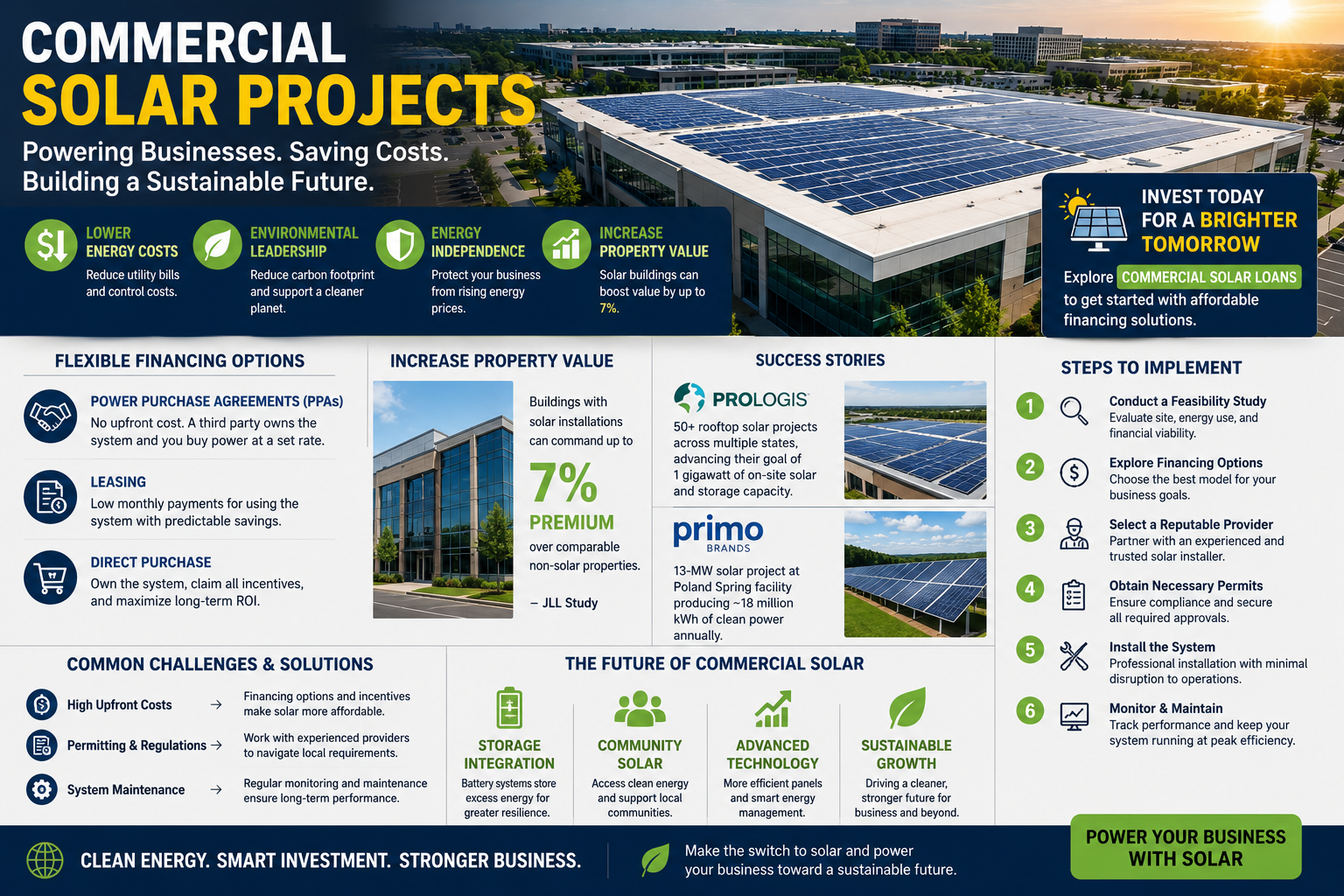
Table of Contents
Financial Benefits of Commercial Solar
Investing in commercial solar installations offers substantial cost savings. Businesses that generate their own electricity reduce their reliance on utility providers, thereby lowering utility bills. Additionally, commercial solar projects typically qualify for federal and state incentives, including tax credits and accelerated depreciation, which can significantly offset installation costs. According to the National Renewable Energy Laboratory, operations and maintenance expenses for solar systems are modest, ranging from $15 to $25 per kilowatt per year, making solar a cost-effective and predictable energy solution. For a deeper look at industry impact, visit Bloomberg Green.
Sustainability Advantages
Switching to solar helps companies deliver on bold sustainability commitments. Using solar power reduces greenhouse gas emissions and lowers the corporate carbon footprint, making a tangible contribution to combating climate change. This proactive stance on sustainability can enhance a company’s market reputation and attract customers and investors who prioritize environmental values. Participation in community solar initiatives can also build goodwill by delivering clean energy to surrounding neighborhoods and by strengthening ties with stakeholders and local communities.
Financing Options for Solar Projects
There are multiple financing models available to commercial organizations considering solar:
- Power Purchase Agreements (PPAs): A third-party developer installs, owns, and operates the system, while the business agrees to purchase electricity at a set rate. This arrangement eliminates upfront capital costs for the organization.
- Leasing: With leasing, the company pays a predictable monthly fee to use the solar equipment rather than owning it. This can yield savings compared to traditional energy sources and provide budget certainty.
- Direct Purchase: Businesses purchasing the system outright gain full access to all available incentives and garner the greatest long-term return on investment, as all energy cost reductions benefit the organization directly.
Impact on Property Value
Equipped with solar energy systems, properties gain greater appeal among buyers and tenants, especially those who value sustainability and lower operating costs. A JLL study found that North American commercial properties with solar installations can command up to a 7 percent premium over comparable non-solar assets. This boost in value is not only financial but strategic, as green building features are increasingly prioritized in commercial real estate decisions.
Case Studies of Successful Implementations
Real-world success stories highlight the impact of commercial solar adoption:
- Prologis: The company partnered with Solar Landscape to create more than 50 rooftop solar projects across states, including New Jersey, Maryland, and Pennsylvania. This supports their ambitious goal of reaching 1 gigawatt of on-site solar and storage capacity, representing industry leadership in operational sustainability.
- Primo Brands: In partnership with Onyx Renewables and PowerFlex, Primo Brands energized a major 13-megawatt solar project at its Poland Spring facility in Maine. This system produces approximately 18 million kilowatt-hours of clean power each year, significantly reducing operational carbon emissions.
Steps to Implement a Commercial Solar Project
- Conduct a Feasibility Study: Analyze site conditions, assess energy consumption patterns, and calculate project financial viability.
- Explore Financing Options: Consider various models, such as PPAs or leases, to match your organization’s financial goals and risk tolerance.
- Select a Reputable Solar Provider: Opt for an experienced contractor with a solid track record in commercial installation and customer support.
- Obtain Necessary Permits: Ensure compliance with local, state, and federal regulations and secure required permits before installation.
- Install the System: Oversee installation to meet both quality standards and project timelines.
- Monitor and Maintain: Set up performance monitoring and regular maintenance schedules to assure ongoing efficiency and reliability.
Common Challenges and Solutions
Despite the benefits, some challenges may arise during commercial solar adoption:
- Initial Capital Investment: High upfront costs may be mitigated through financing models such as PPAs and leases.
- Regulatory Hurdles: Permitting and navigating local utility requirements can be complex; engaging experienced providers and legal consultants can help streamline the process.
- Interconnection Delays: Early coordination with utility companies and thorough planning are essential to avoid delays in grid integration and deployment.
Future Trends in Commercial Solar
- Community Solar Projects: Organizations can participate in shared, off-site solar installations that supply clean power to local contributors and reinforce social responsibility initiatives.
- Integration with Energy Storage: Combining solar with battery storage enhances energy resilience and enables smarter consumption management.
- Advancements in Technology: Continued increases in panel efficiency and adoption of smart grid technologies are poised to make solar solutions even more attractive and accessible to the commercial sector.
For further industry insights and research on solar trends, reference Bloomberg Green.
By adopting commercial solar projects, businesses can enjoy robust financial savings, make meaningful contributions to sustainability goals, and achieve a resilient, forward-thinking energy strategy that benefits both their organization and the environment.